

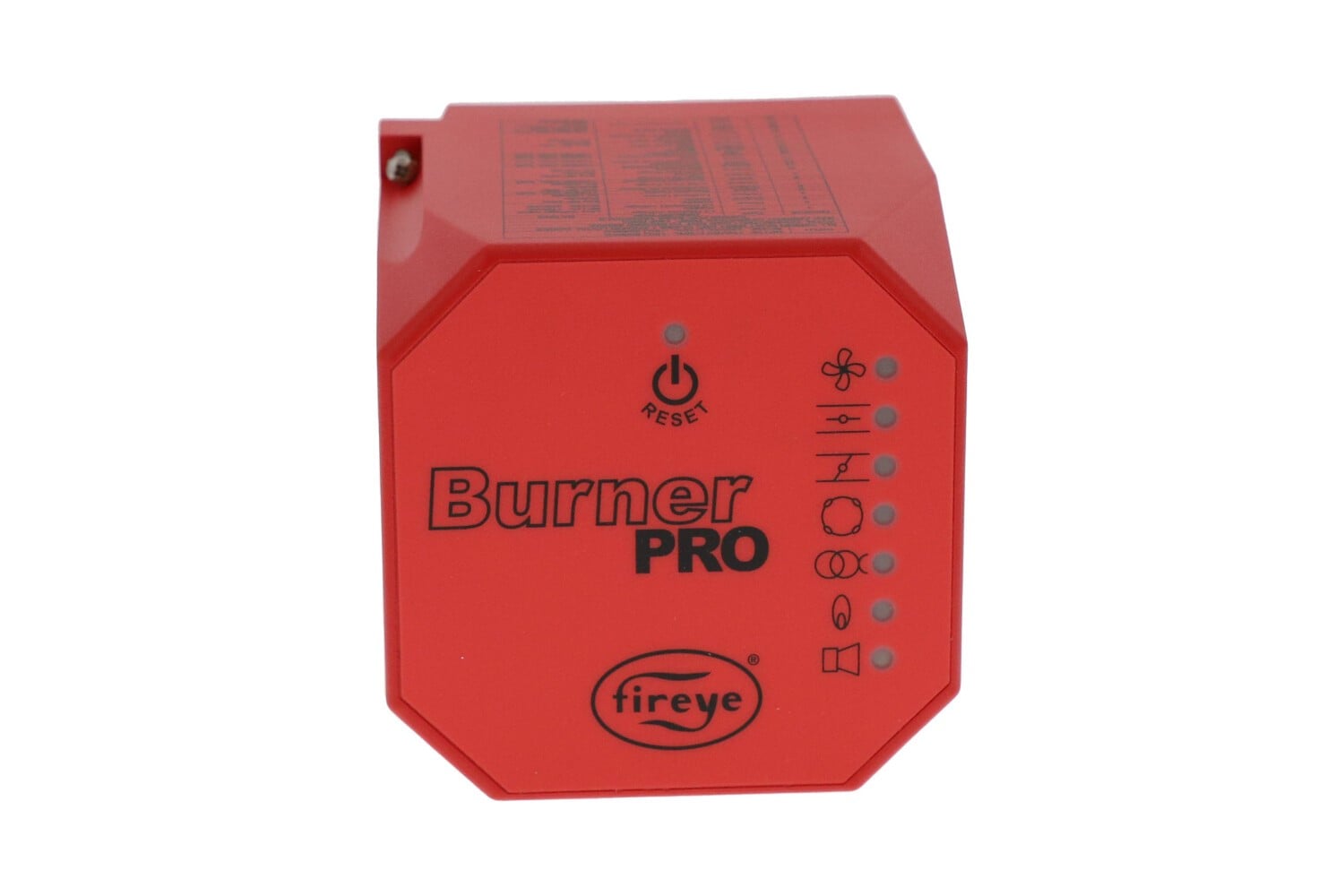

BP230UVFR-S3 Fireye Burner Control
$884.20
The Fireye BP230UVFR-S3 is a 230V BurnerPRO control module, representing a compact, microprocessor-based flame safeguard system. It is designed to provide automated burner sequencing, ignition, and continuous flame monitoring for commercial heating and industrial process equipment.
Overview
The Fireye BP230UVFR-S3 is a 230V BurnerPRO control module, representing a compact, microprocessor-based flame safeguard system. It is designed to provide automated burner sequencing, ignition, and continuous flame monitoring for commercial heating and industrial process equipment. This specific Series 3 model is engineered for dual-amplifier flexibility, allowing for use with ultraviolet (UV) non-self-check scanners and flame rod (FR) sensors. It is a direct replacement for Siemens LFL series controls when used with the appropriate grounding tab and wiring base.
Features
- Dual Integrated Amplifiers: Supports both UV scanners and Flame Rod (FR) applications for maximum versatility.
- Advanced Diagnostics: Features smart LEDs for real-time onboard diagnostic lockout information and fault codes.
- Robust Safety Logic: Includes non-volatile lockout capability, proof of fuel valve closure, and air-flow proving.
- Troubleshooting Tools: A run/check feature allows operators to pause the program sequence at specific stages like Purge or Ignition.
- Durable Design: IP40 protection rating with an extended operating temperature range from -40 degree C to +60 degree C.
- High Compatibility: Designed to be compatible with standard 60-2981-1 wiring bases and Siemens LFL wiring configurations.
Specifications
- Model Number: BP230UVFR-S3
- Supply Voltage: 230 VAC (+10%, -15%), 50/60 Hz, single phase
- Power Consumption: 7 VA
- Timings: Series 3 configuration
- Flame Failure Response Time (FFRT): 1 second
- Operating Temperature: -40 degree C to +60 degree C (-40 degree F to 140 degree F)
- Humidity: 90% RH (non-condensing)
- Protection Category: IP40 (module only)
- Weight: Approximately 2.5 lbs (1.13 kg)
Applications
The BP230UVFR-S3 is primarily used in commercial and industrial combustion systems to manage single-burner setups firing either oil or gas. It is ideally suited for applications requiring high-reliability flame safeguard control, such as boilers, furnaces, and process heaters. Because it supports both UV and FR detection, it is frequently employed in systems where either optical or ionization-based flame sensing is preferred for safety and performance monitoring.
| Weight | 4 lbs |
|---|---|
| Dimensions | 11 × 7 × 7 in |
Be the first to review “BP230UVFR-S3 Fireye Burner Control”
You must be logged in to post a review.
Related Product(s)


Reviews
There are no reviews yet.