

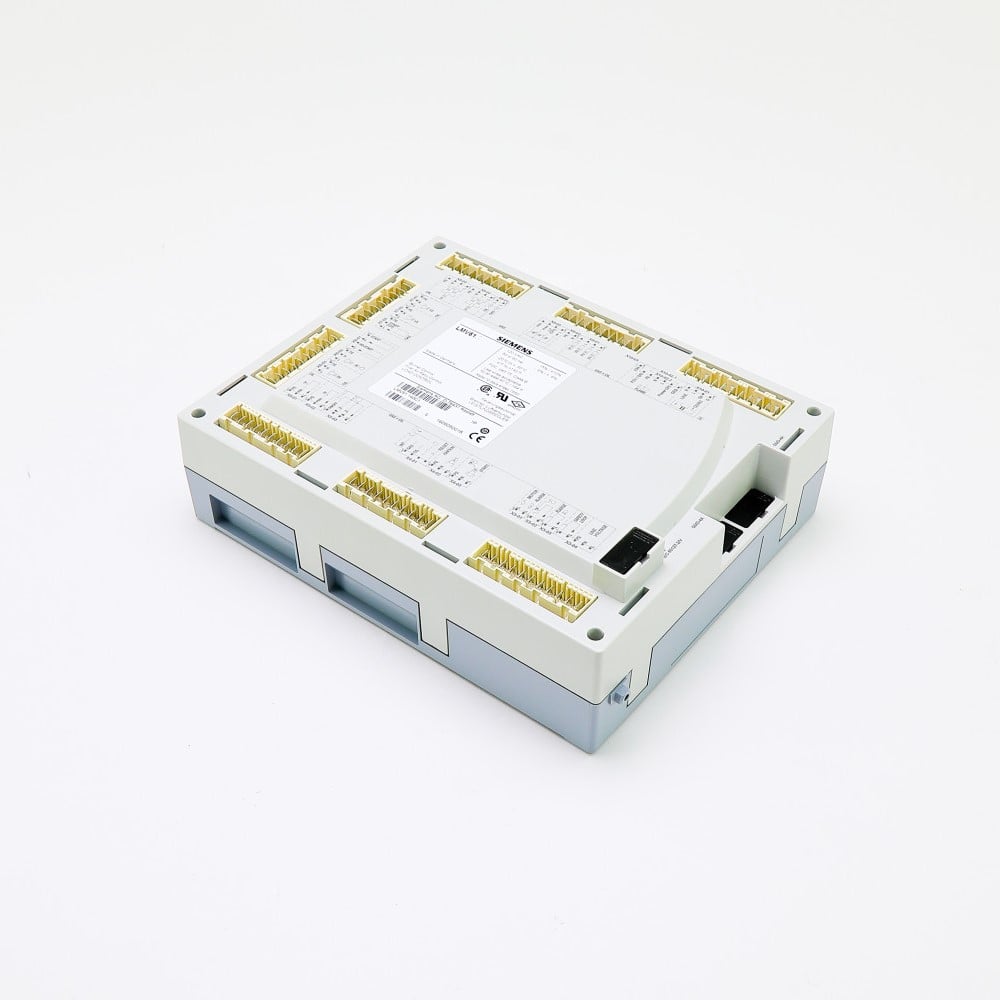

LMV51.040C1 Siemens Burner Control
$2,976.90
The Siemens LMV51.040C1 is a high-performance, microprocessor-based burner management system designed for the precise control and supervision of single or dual-fuel forced draft burners. As a core component of the LMV5 series, this 110V base unit integrates flame safeguard functions with electronic fuel-air ratio control. It is engineered to optimize combustion efficiency and safety in medium to high-capacity industrial and commercial applications, such as steam and hot water boilers or thermal fluid heaters.
Overview
The Siemens LMV51.040C1 is a high-performance, microprocessor-based burner management system designed for the precise control and supervision of single or dual-fuel forced draft burners. As a core component of the LMV5 series, this 110V base unit integrates flame safeguard functions with electronic fuel-air ratio control. It is engineered to optimize combustion efficiency and safety in medium to high-capacity industrial and commercial applications, such as steam and hot water boilers or thermal fluid heaters. The system utilizes a CAN bus interface for seamless communication with actuators and display units, providing a sophisticated linkageless control solution that replaces traditional mechanical linkages.
Features
- Electronic fuel-air ratio control for up to 3 actuators simultaneously (with up to 4 connected)
- Integrated flame safeguard with support for continuous operation using IR flame sensors or ionization probes
- Integrated gas valve proving system to ensure safety and prevent leaks
- Microprocessor-based architecture with dual processors for high reliability and self-supervision
- CAN bus communication system for interconnection of system components like the AZL52 display
- Modbus communication capability for integration with building automation or external controllers
- Supports ultra-accurate stepper motor actuators with 900 repeatable positions for precise combustion tuning
- Built-in thermal shock protection and dual flame scanner options
Specifications
- Model: LMV51.040C1
- Operating Voltage: AC 120 V (+10% / -15%)
- Frequency: 50/60 Hz (+/- 6%)
- Power Consumption: Approximately 30 W
- Protection Rating: IP00 (requires suitable enclosure for higher ratings)
- Operating Temperature: -4 F to +140 F (-20 C to +60 C)
- Humidity: < 95% r.h. (non-condensing)
- Weight: Approximately 0.331 kg (0.73 lbs)
- Designed Lifetime: 250,000 burner startup cycles (approx. 10 years)
Applications
- Control and supervision of forced draft gas and oil burners in commercial and industrial settings
- Integration into steam boilers, hot water boilers, and thermal fluid heaters
- Fuel-air ratio control for dual-fuel burners requiring high-precision modulation
- Modernization of legacy burner systems by replacing mechanical linkages with electronic linkageless control
- High-demand burner operations in HVAC systems requiring continuous duty flame supervision
| Weight | 4 lbs |
|---|---|
| Dimensions | 13 × 11 × 6 in |
Be the first to review “LMV51.040C1 Siemens Burner Control”
You must be logged in to post a review.
Related Product(s)


Reviews
There are no reviews yet.